Tag Archives: Aberdeen

Kinnaird Head Lighthouse

One of Scotland’s first lighthouses, Kinnaird Head’s fascinating story is to be re-told.

The lighthouse, which is owned by Historic Scotland, but run by the Museum of Scottish Lighthouses, will see its existing interpretation overhauled and new visitor information panels situated throughout the site which will explain its rich history, from a castle into a lighthouse, the only conversion of its kind in Scotland.

The new panels, which will replace the existing public information, will look at areas such as the workings of the old lighthouse including the engine room and foghorn, life as a lighthouse keeper, and the modern lighthouse, which remains exactly as it was when it was decommissioned in 1991.

The panels will also explain some of the folklore associated with the site, including the famous tale of the piper who drowned in The Wine Tower after being imprisoned by a lord who was angry at him for falling in love with his daughter. Legend has it that the piper can still be heard playing his pipes while he searches for his lost love.

The panels will be placed at key areas around the site and footpath to share its story with visitors, supporting the existing lighthouse tour, which offers daily guided commentary of the site.

“This is such a diverse site, with many stories to tell” said the Museum’s Director Virginia Mayes-Wright, “We are really looking forward to be able to offer more interpretation to our visitors and the new panels will be a great addition to the site.”

Kit Reid, Interpretation Manager for Historic Scotland said;

“We hope that the new interpretation will help bring to life the fascinating history of the site. The north-east of Scotland has a strong maritime tradition and Kinnaird Head is an important part of the region’s heritage.

“It is a truly unique building in Scotland, and a hugely important one and we hope that the new panels will be enjoyed by visitors and educational groups alike.”

The new panels will be on site from this Spring. For further information about the new interpretation panels please contact the Museum on 01346 511022.

Happy Christmas!

Well it’s here. Whether you are interested in the presents or the religious significance there is really no way round it. So here is our view of the best Christmas message in appropriately digital form. Thank you for reading The Reporter. Our visitor numbers continue to increase day by day. For our Christmas present please tell six of your friends about us to keep us on track!

Great speeches

Political journalist and author, David Torrance, is on the hunt…. for the greatest speeches by Scots, ever.

The reporter on STV’s Politics Now – who also freelances for, among others, The Times – has most recently published an unauthorised biography of the First Minister, Alex Salmond.

And now he is turning his attention to either speeches delivered in Scotland or by Scots throughout the world.

Among the contenders are speeches by the late Jimmy Reid, Margaret Thatcher, J. M. Barrie and James Maxton. Torrance is particularly keen to locate more examples of oratory by non-politicians.

Any suggestions then email him at davidtorrance@hotmail.com

New buildings opened at Aberdeen College

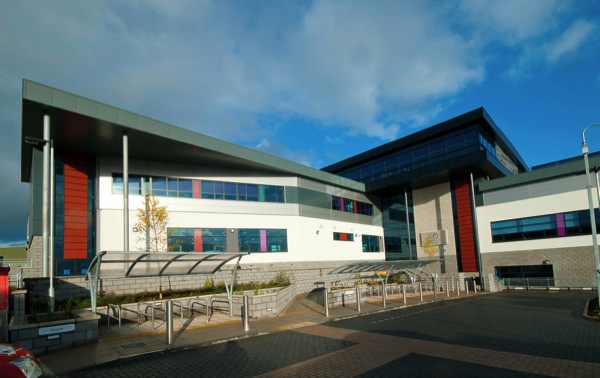
The £10 million Aberdeen College Construction Training Facility designed by Archial, one of the country’s largest architectural practices and a member of the global Ingenium Group of companies, has opened to students.

Designed as the new main building on the Altens campus to relocate construction trade courses onto the same site as engineering, completion allows for the refurbishment of the existing Altens Buildings to facilitate estate rationalisation and to bring ASET (Aberdeen Skills and Enterprise Training) from an adjacent site in Altens onto one complete campus.

The new facility contains workshops and classrooms for joinery, brickwork, painting and decorating, and plumbing courses, as well as a new library, learning resource centre, fitness suite and communal eating areas.

Archial associate Ricky Connell said: “The basis of the college layout is to reform the urban streetscape to Minto Avenue and Minto Drive respecting the topography of the site. The redevelopment of the site, whilst integrating with the longer term masterplan, aims to enable all future stages and development goals to be achieved. It also creates significantly improved access/egress from the site, allowing for more efficient parking and open spaces within the campus itself.

“The communal area is conceived as a linear strip or ‘street’, which links all the parts of the college, as well as providing a buffer to the car parking. The street provides a series of high quality landscaped spaces for casual social interaction, vital to the life of any educational campus.

“The building is predominately two storeys with a central core of three storeys. The entrance core houses reception, staff and student common rooms, refectory and fitness suite. The two wings, which house the workshop areas and traditional college areas, can be locked down out of hours to allow only essential core areas to operate and hence reduce services requirements, whilst providing the flexibility and opportunity to use core areas for non-educational purposes.

“To help reduce the mass of the building, the elevations are designed as lightweight pavilions, set on a robust ‘stone’ plinth. The use of masonry on the ground floor and lighter cladding materials on the upper floors makes reference to the indigenous buildings in the surrounding area, whilst also mirroring the internal usage.”

Given Aberdeen College’s pronounced sustainability agenda, a key element of the design brief was that the building would incorporate all the elements required to achieve a BREEAM ‘Excellent’ rating. To that end, the building incorporates a variety of CO2-reducing measures including the installation of solar panels, a 25KW wind turbine, natural ventilation, modulated lighting, insulation levels higher than building regulations, and radiant heat in the workshops in place of blown heat. Rain water is collected from the roof for use in the toilet cisterns.

The facility marks the first phase of the college’s comprehensive estates development strategy. Aberdeen College has about 30,000 enrolments each year and around 5,500 full-time students.

Archial is an international architectural specialist with public and private-sector clients. Its diverse portfolio includes work in corporate, education, government, healthcare, industrial, mixed-use, residential, retail and transport sectors and it employs approximately 300 employees in offices throughout England and Scotland. The award winning Archial organisation has been known for delivering intelligent solutions that combine creative excellence with commercial success.

City Council draft Business Plan

Recommendations on Aberdeen City Council’s draft Business Plan for the next five will be considered by the Full Council on 15 December.

Finance and Resources Committee members (the Committee) today agreed the recommendations of the City Council’s ruling Administration on the policy options contained in the draft Five Year Business Plan should be presented to the full council for further decisions.

The City Council has published a colour-coded version of the Priority Based Budgeting: Final Draft Report.

The colour green indicates that the Administration is recommending to the Full Council that the savings be accepted.

The colour amber indicates that the Finance and Resources Committee is recommending that further reports be drawn up with more information about the potential impact of making the saving, or with alternative ways of making the saving.

Policy options coloured in red are the budget savings which the Committee recommended should not be accepted at this time but which may be re-visited before the City Council’s budget-setting day in February and in light of the detailed budget settlement for Aberdeen City Council, which will be announced by the Scottish Government on 8 December.

The only exceptions are – lines ACC_SO18 (page 39 of the report) Council-wide Options – permit Chief Executive to decide on management structure savings; line CG_LDS_ 07b (page 38) Corporate governance Stop/Reduce – Council committees aligned to statutory minimum; review in 2012; line CG_LDS_ 07e (page 38) Corporate Governance Stop/Reduce – 5% reduction in Statutory Responsibility Allowances Enhancement; CS_FS03 (page 38) Corporate Governance Stop/Reduce – reduce Fairer Scotland Fund by £750,000, not £1 million, and hold community summit.

Finance and Resources convener Councillor Kevin Stewart said: “No one enters elected office to make cuts but unfortunately the depth of savings we are required to make in these extremely difficult economic times gives us no choice but to do so.

“We have some extremely difficult decisions to make over the next few weeks and months to make sure we get through the next five-year period.

“Those decisions will affect all services right across the council. It is impossible to protect any area from the savings we will have to make. But what this Administration can promise is that we will set a budget according to the priorities of the council, the citizens and our partners.

“We will make sure that the most vulnerable people are protected, that the economy of this city remains vibrant, that school attainment is improved and that we manage our waste better. We will do our best for Aberdeen in these difficult times.

“We will continue to consult closely with the public and our partners in the public sector, voluntary sector and business communities between now and February. But people have the right to know now the Administration’s thinking on how we should balance the books.”

Today’s recommendations from the Committee were on the policy options contained in the Priority Based Budgeting Final Draft Report, which is forming the basis of consultations with the people of Aberdeen, the city’s business, voluntary and academic sectors, and with other public sector partner organisations.

The report – in which £150 million of potential savings were identified – was the result of more than five months of detailed work by City Council officials to define existing services, establish current costs, and then draw up policy options. The review covered more than 200 services and resulted in some 750 options, which are laid out in four categories –

* Transformation or Strategic options, which change the nature of the service delivery;
* Efficiency options, which do not change the nature of a service but focus on efficiency and effectiveness;
* Efficiency-with-barriers options, which would change the nature of service delivery and require some change to legislation;
* Stop/Reduce options, which would cut the level of service or result in a service no longer being delivered.

The 5 Year Business Plan approach is a fundamentally new way of planning future spending and investment in the city and is based on Aberdeen City Council’s six key priorities –

* provide for the needs of the most vulnerable people;
* help to ensure that all schoolchildren reach their potential;
* manage waste better and increase recycling;
* encourage new affordable housing;
* ensure a sustainable economic future for the city;
* ensure efficient and effective delivery of services by the Council and with its partners.

The City Council is making a major effort to gather the views of as many citizens as possible before finalising the Five Year Business Plan. Around 100 Information Points have been set up across the city to allow people to have their say by filling in questionnaires on spending and services. Online comments are being collected on the City Council’s website at www.aberdeencity.gov.uk, where the questionnaires are also available. Over 1,000 have been returned so far.

More than 300 people have attended public meetings. In excess of 100 of the city’s top stakeholders have also been involved in consultations.

Aberdeen’s Sea Energy win Green Energy award

SeaEnergy Renewables has scooped a prize in this year’s Green Energy Awards.

The prestigious accolades – run by industry body Scottish Renewables and now in their ninth year – took place last week in the Edinburgh International Conference Centre. The event was hosted by Fred MacAulay and a keynote speech was delivered by Secretary of State for Scotland Michael Moore.

SeaEnergy Renewables won the Best New Business Award. The Awards celebrate Scotland’s success in tackling climate change, creating a low carbon economy and maintaining its global lead in the green energy industry. They recognise innovation, enterprise and excellence in the renewable energy industry, from student and community projects to best business and outstanding contribution to the sector.

Joel Staadecker, the CEO of SeaEnergy Renewables, said:-“SeaEnergy Renewables is thrilled to win the Best New Business Award at the Green Energy Awards this year. SeaEnergy Renewables is Scotland’s only independent offshore wind developer and we are playing a vital role in this emerging industry. Three of our large-scale development sites are offshore Scotland. We are so proud to be a key part of Scotland’s offshore wind industry and to be a major participant in the effort to secure Scotland’s future as a global energy capital. Receiving this outstanding award is really a testament to both our pioneering role in the development of offshore wind and to the truly outstanding people that make up SeaEnergy Renewables.”

New figures from Scottish Renewables show that Scotland is on track to surpass the Government’s target of 31 per cent of all electricity demand to be met from renewables by 2011.

Speaking at the organisation’s annual dinner and awards for outstanding contribution to the growth of the industry in Edinburgh, Chief Executive Niall Stuart acknowledged the part played by companies like SeaEnergy Renewables in driving forward the industry:-“Congratulations to SeaEnergy Renewables. Together, this year’s Green Energy Award winners will deliver huge economic and environmental benefits to communities across Scotland, and it’s all thanks to the determination, ambition and ideas of companies like SeaEnergy Renewables.

Scotland’s renewables industry has grown faster and further than anyone dared to hope even a few years ago. We now have over 4GW of developments in operation – enough to generate 32 per cent of the annual demand for electricity from every home and business in the country.”

Speaking on behalf of All-Energy, sponsors of the Best New Business Award, Judith Patten, Project Director, said:-“All-Energy is delighted to continue to sponsor the ‘Best New Business Award’. Over the years it has been exciting, and rewarding, to see ‘our’ winning companies go from strength to strength. Scotland is rightly proud of the tremendous success stories emanating from many innovative companies who are rising to the challenges and grasping the ‘nettle of opportunity’ offered by the rapidly expanding renewable energy sectors – our ‘Best New Business Award’ winners have certainly been at the forefront. We wish this year’s richly deserved winner much success in the coming months and years, and know they will come to be seen as one of the ‘Best of the Best’.”

Sea Energy has a series of videos on YouTube to explain their technology.  This is one of them

New director at John Clark

Chris Clark has been appointed as a director at the John Clark Motor Group, the top four Scottish motor group established by his father, John Clark, in 1977.

Chris, age 34, joined the family business in 2007 after ten years working with BMW UK in a number of management roles in sales, marketing and customer service. During his time he built a strong relationship with BMW in the UK and in Germany.

Commenting on Chris’s appointment as a director, John Clark, chairman and managing director said:

“I am delighted that Chris has decided to take up a career in the family business. I have no doubt that the experience he has gained during ten years with BMW UK and the past three years working in various business development roles within the group, will be a great asset to the future development of the John Clark Motor Group.”

Like his father, Chris Clark is an accomplished sportsman and particular passion for motor racing. He is married to Clare, who works for Rolls Royce Motor Cars.

The John Clark Motor Group is Scotland’s fourth largest motor group with an annual turnover of £260 million and 640 employees.

Based in Aberdeen, the group operates BMW, Mini and Audi dealerships in Aberdeen and Dundee, Volkswagen in Aberdeen and Fife, Skoda in Aberdeen and Dundee, Seat in Aberdeen and Land Rover in Edinburgh. The group also holds the Volkswagen LCV franchise for the East of Scotland and owns Clark Commercials in Aberdeen.

Tiso move into Aberdeen

Outdoor equipment and clothing specialist Tiso has relocated to new premises at 1 John Street in Aberdeen after 29 years at their existing location in the Netherkirkgate.

The company has taken a 20 year lease on the new 10,000 sq ft site which is located close to John Lewis, Aberdeen College and Bon Accord Shopping Centre.

FG Burnett acted on behalf the landlord, a local private investor, and has also been retained by Tiso to sell its existing shop. The site at 26 Nethergate provides over 6000 sq ft accommodation and offers in excess of £400,000 are being sought.

Tiso managing director, Chris Tiso, said: “The move to new premises on John Street is a fantastic opportunity for Tiso to develop its already extensive offering of outdoor equipment.

“Over the past 29 years of trading in Aberdeen we have built up a loyal customer base which has been achieved through the integrity of both the brands we stock as well as our investment and priority attached to staff training, and the move larger premises can only strengthen this position.”

FG Burnett director, Richard Noble, said: “The letting of 1 John Street demonstrates continued demand for good quality retail accommodation in Aberdeen city centre. This 10,000 sq ft retail warehouse, with dedicated parking, gives Tiso the platform to continue to grow their business in the city.”

HM Inspector of Prisons on Peterhead

Conditions at Peterhead Prison remain among the worst of any establishment in Scotland with sanitation and hygiene arrangements being of particular concern, according to a report published today by HM Chief Inspector of Prisons.

The report also highlights concerns that there is insufficient provision to address offending behaviour and that very few prisoners are tested in less secure conditions before release.

Despite the poor fabric of the prison, the report commends staff and management for maintaining high standards of prisoner care, and highlights:

* The prison is safe for both prisoners and staff
* The provision of medical and mental health services are good
* There is adequate access to constructive activity during the day

Chief Inspector of Prisons Brigadier Hugh Monro said:

“Conditions in Peterhead Prison remain among the worst of any establishment in Scotland. I am particularly disappointed that the degrading practice of ‘slopping out’ remains.

Given the specialist nature of Peterhead I am concerned about the insufficient provision for addressing offending behaviour and the small number of prisoners who are appropriately prepared and tested prior to release. I have raised these issues in three of my six recommendations to the Scottish Prison Service and the Scottish Government and I would want to see them addressed as a matter of priority.

“My inspection did find many positives in Peterhead Prison with a total of 16 examples of good practice, the majority of which are a testament to the dedication of staff and management who have continued to deliver under difficult circumstances. The fact remains however that these are all overshadowed by the very real issues surrounding the age and fabric of the establishment.”

Look out for Waxwings in Aberdeenshire

“Keep an eye on the berry trees in your neighbourhood, they could be harbouring flocks of a very special visitor,” that’s the message from RSPB Scotland who are asking to the public to keep an eye out for waxwings. Large numbers of these migrant birds from the north have arrived in recent weeks across Scotland, with the North-east playing host to some of the biggest flocks.

Waxwings are eye-catching birds, about the size of a plump starling, but pinky-brown in colour with striking markings and a punk-rocker crest. Small numbers travel to the UK every year from their breeding grounds in Scandinavia and Northern Russia, with Aberdeen usually one of the best places to look for them. Every few years much larger flocks of the birds appear in what is termed an ‘irruption’, which is thought to be caused by a quest for food, possible in relation to a shortage of berries in their wintering feeding grounds.

This can result in the impressive spectacle of large flocks of these colourful visitors descending on any suitable feeding areas. “The waxwings are not fussy birds and they will eat a wide range of berries and soft fruit,” said David Parnaby, who works at the RSPB Loch of Strathbeg nature reserve, near Crimond. “This means that they are just as likely to turn up in a supermarket car park or busy street as on a peaceful nature reserve – so watch out for any berry trees near you. They have beautiful plumage, a delightful, tinkling, trilling call and they can be really approachable, so they’re an all round great species to brighten up a dull winter’s day”.

Irruptions involve large numbers of waxwings appearing in the UK, sometimes in several waves over the autumn and early winter. If the Scottish berry crop is good these will stay and often break up into smaller flocks.  If the berries run out here, the birds will move on again to England, Ireland or more southern areas in continental Europe. Irruptions used to occur around once every ten years but have become more frequent in recent years and often involve larger numbers. One possible explanation for this might be that climate change has resulted in less consistent weather patterns which could result in more unpredictable berry crops, but it could also be that waxwings are having more productive breeding seasons and are having to ‘irrupt’ from Scandinavia more often in search of food as they put extra pressure on northern berry crops.

Some of the largest flocks seen so far in the region include 1,000 at the Bridge of Don, 800 at Kincorth, 190 in Ellon and 150 at Stonehaven, with flocks of several dozen noted at many locations across the region. “The flocks often strip the berries from an area and then disperse, so anyone who hasn’t seen a waxwing yet should find some trees or bushes that still have plenty of berries on them and keep checking them, as they could well be heading your way soon. If you have planted bird-friendly plants like hawthorn, elder or cotoneaster, you may even be able to see them in your garden and what better reward for wildlife gardening than a close-up view of some of these spectacular visitors?”.